

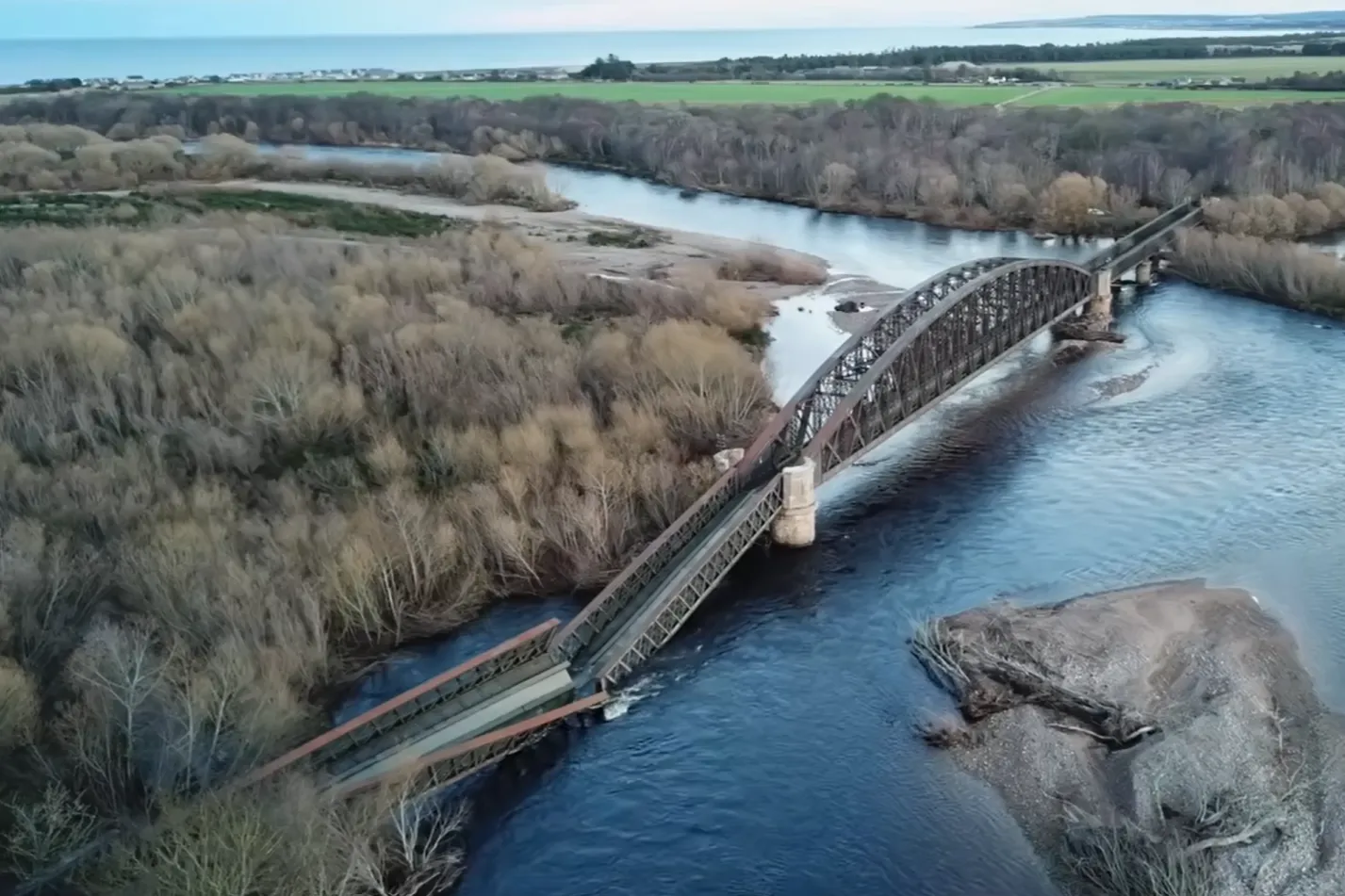
The collapse of the 19th‑century Garmouth Viaduct in Moray has intensified scrutiny of its inspection and maintenance regime, after a 2014 recommendation for a full structural survey was never implemented. The former rail structure, completed in 1886 and now part of the National Cycle Network, spans 107m over the River Spey and is owned and maintained by Moray Council.
Imagery from the incident shows one pier apparently having failed or been washed out, leaving the iron deck rotated and partially submerged. No injuries were reported, but the failure has raised concerns about asset management of legacy iron bridges carrying pedestrian and cycle traffic.
The River Spey is described as the fastest running river in Scotland, implying a high scour risk at foundations and substructure. Questions are now being asked as to whether scour vulnerability and pier deterioration were adequately monitored and whether earlier intervention could have prevented the collapse.
Moray MSP Richard Lochhead has written to the council’s chief executive seeking a detailed chronology of inspections and findings since the authority took ownership of the viaduct. He has requested a summary of the essential repairs identified in the 2014 report, clarification on why the recommended full structural survey was not progressed, and an outline of how the council will now assess residual structural integrity and future options.
Lochhead has also called for the council to review its handling of the long‑running local campaign for surveys and remedial works. The community had been pressing for the 2014 recommendation to be acted upon, and Lochhead confirmed he had previously raised the issue with the council’s former chief executive.
Moray Council has confirmed that its engineers are assessing the situation and has urged the public and media to stay behind police cordons and avoid the remaining structure. Access to the bridge has been prohibited while the condition of the surviving spans and supports is evaluated.
Independent bridge specialist Richard Fish told New Civil Engineer that photographic evidence indicates a scour‑related failure of the pier foundations. He noted that, despite the viaduct’s disused rail status, its ongoing use by pedestrians and cyclists should have triggered scour inspections and formal risk assessments, and said it will be important to establish whether these were carried out and what they concluded.
The collapse will now focus attention on how ageing iron and steel bridges on walking and cycling routes are prioritised within local authority inspection programmes. Key issues for engineers will include the adequacy of historic underwater and substructure inspections, the treatment of scour risk on fast‑flowing rivers, and the governance around implementing recommendations for full structural surveys on non‑vehicular heritage assets.