

Light steel frame manufacturing demonstrates how industrialised methods can boost construction productivity beyond traditional on-site techniques. Darren Richards, Light Steel Frame Association (LSFA) Steering Group member and Managing Director of Cogent, provides a front-line perspective.
As a leading multi-disciplinary consultancy specialising in the field of offsite manufacturing and industrialised construction, my work with Cogent gives me privileged insight into the transformation taking place in the light steel frame (LSF) sector.
Central to this is the rapid advancement of mechanisation, automation and robotics, particularly in rollforming and downstream assembly processes. Modern light steel production integrates digital design, lean manufacturing, DfMA optimisation and component standardisation – all working together to create a high-performance, repeatable building system. Across the offsite sector, manufacturers are investing more in advanced production lines that combine intelligent rollforming, CNC processing, robotic handling and software-driven production control. The result is a shift from craft-based fabrication to data-driven manufacturing – where precision, repeatability and speed are engineered into the process from the very start.
Rollforming technology
At the heart of LSF production sits the light steel rollforming machine – a specialised, high-precision system that fabricates cold-formed steel components such as studs, tracks and joists. Rollforming itself is not new, but what is different is the degree to which rollforming is now digitally integrated, automated and embedded within end-to-end construction manufacturing workflows.
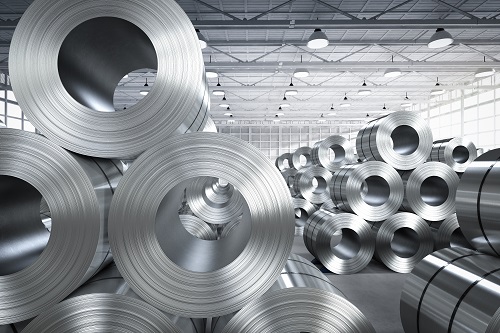
A rollforming machine uses a series of rollers and tooling stations to progressively shape coiled steel into precise structural profiles. Computer-controlled systems manage feeding, punching, cutting and forming operations in a continuous process. Modern machines can switch profiles quickly, adjust dimensions automatically and produce components directly from BIM-driven production files. This enables manufacturers to move from static catalogue products to project-specific, digitally configured outputs without sacrificing speed or accuracy. Cost efficiency improves through continuous production and reduced labour input. Material efficiency increases through optimised nesting and cutting routines. Production speed is dramatically higher than manual fabrication. Most importantly, consistency and precision are built into every component produced. However, the real productivity gains come when rollforming is integrated into a broader advanced manufacturing ecosystem.
Digital design workflows
Today’s leading LSF facilities operate more like automotive sub-assembly plants than traditional construction workshops. Digital design models flow directly into manufacturing execution systems. Computer-aided engineering defines section performance in advance. Components are manufactured to exact project parameters in controlled factory conditions. Errors are designed out before production begins, not corrected on site afterward.
This is where Design for Manufacture and Assembly (DfMA) becomes critical. When LSF systems are designed specifically for automated production and efficient assembly, manufacturing throughput rises and site installation time falls. DfMA encourages rationalised grids, repeatable connection details, standardised openings and coordinated service zones. These design decisions make automated production more efficient and downstream assembly more predictable.
Component standardisation plays an equally important role. The more a manufacturer can standardise core elements – whilst still allowing configurable variation – the more productive the system becomes. Standardised connection strategies, panel interfaces and module dimensions enable faster rollforming setup, simplified robotic handling and more efficient panel assembly. Productivity gains come not from uniform buildings, but from standardised parts used in configurable ways.
Automation is now extending well beyond section production. Robotic and semi-robotic systems are increasingly used in panel assembly processes – positioning members, fixing connections, applying sheathing boards and preparing panels for logistics. Automated screw fastening and vision-guided alignment systems are beginning to reduce manual intervention while increasing output consistency.
Robotics also improve overall equipment utilisation. Instead of production lines waiting for manual staging and repositioning, robotic handling systems can maintain continuous flow. This improves throughput and reduces bottlenecks – a core lean manufacturing objective. Automated stacking, labelling and packaging systems further streamline factory operations and reduce handling damage.
Data-rich production models
Lean manufacturing principles are particularly well suited to light steel frame production. Value stream mapping, waste reduction, just-in-time material supply and continuous improvement methodologies translate directly from other advanced manufacturing sectors. Because light steel frame production is already data-rich and process-driven, it lends itself naturally to lean optimisation. Sensors and production data can be used to monitor cycle times, defect rates and material usage – enabling ongoing performance refinement.
Digital technology is the enabler that ties all this together. World-class BIM and detailing software platforms – including those used widely in LSF such as advanced steel detailing and parametric modelling tools – allow framing systems to be produced exactly to project requirements while maintaining engineering compliance. Model-to-machine workflows ensure that what is designed is exactly what is manufactured. This supports regulatory compliance, traceability and emerging Golden Thread and Digital Product Passport requirements.
There are also sustainability benefits. Precision cutting and forming reduces offcuts and scrap. Optimised production planning reduces waste to landfill. Efficient material usage lowers embodied carbon. Factory controlled production reduces site disruption and transport inefficiencies. When combined with low-carbon or recycled steel supply, light steel frame manufacturing can support strong ESG performance narratives.
The future
Looking ahead, the convergence of intelligent manufacturing, robotics and digital twins will further accelerate progress. Simulation of production lines, predictive maintenance of machinery and AI-assisted production scheduling are already common in other sectors and are beginning to appear in advanced offsite factories. As these capabilities mature, LSF production will become even more efficient and resilient. The key message for the construction sector is clear: light steel frame manufacturing is no longer a simple metal forming activity – it is a sophisticated, digitally enabled production system. The opportunity is not just faster fabrication, but a fundamentally more industrialised approach to building delivery.