

For years, construction has been playing catch-up with digital innovation. BIM pushed the industry forward—but now a more powerful tool is emerging, and it’s starting to separate the leaders from the laggards.
Enter digital twins…
Once seen as futuristic, digital twins in construction are rapidly becoming a practical tool for improving project delivery, reducing risk, and unlocking long-term value. And unlike many industry buzzwords, this one is proving its worth on real sites, right now.
Beyond BIM: What Makes Digital Twins Different?
Let’s be clear—this isn’t just another modelling tool.
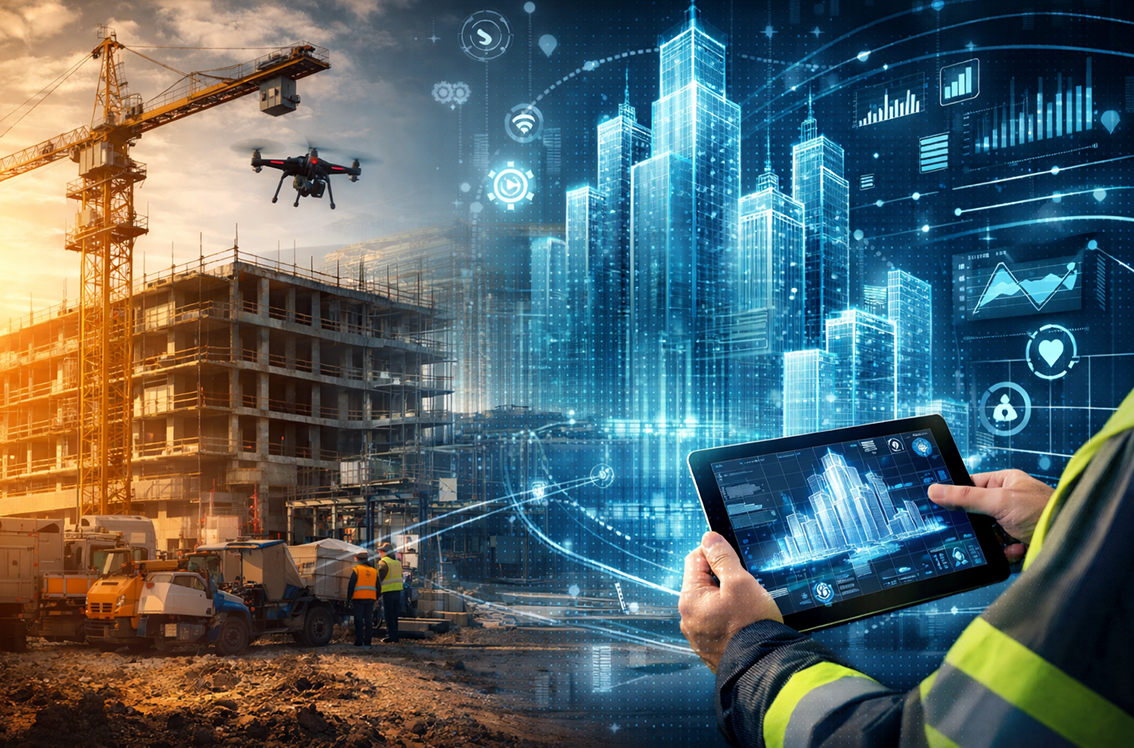
A digital twin is a live, data-driven replica of a physical asset. It doesn’t just show what should be happening—it reflects what is happening in real time.
By pulling in data from sensors, drones, IoT devices, and site systems, digital twins give project teams something construction has always lacked: continuous visibility.
Why Digital Twins Are Gaining Momentum
The rise of digital twins isn’t coincidence—it’s being driven by real pressures across the construction sector:
Tighter margins demand smarter decision-making
Client expectations now extend beyond handover into lifecycle performance
Sustainability targets require ongoing monitoring, not guesswork
Labour shortages are pushing firms toward automation and efficiency
In short: construction can’t afford blind spots anymore.
Where Digital Twins Deliver Real Value
This isn’t theory—digital twins are already changing how projects run.
Smarter Project Tracking
Forget outdated progress reports. With real-time data feeding into a digital twin, teams can instantly compare planned vs actual performance—and act before problems escalate.
Predictive Maintenance That Actually Works
Instead of reacting to failures, contractors can spot issues early. That means fewer disruptions, lower costs, and better asset performance over time.
Faster, Better Decisions
Need to test a design change? Assess a delay? Model a risk? Digital twins allow teams to run scenarios before committing on site.
A Step-Change in Safety
From wearable tech to environmental sensors, live data can highlight risks as they emerge—not after the fact.
The Barriers (And Why They’re Shrinking)
If digital twins are so powerful, why isn’t everyone using them?
The usual suspects still apply:
Fragmented data systems
Upfront investment concerns
Skills shortages in construction tech
Resistance to change
But here’s the shift: these barriers are eroding fast.
Technology is becoming more accessible. Platforms are integrating more easily. And clients are starting to expect digital capability as standard.
The Competitive Edge No One’s Talking About
This is where digital twins become more than just a tool—they become a strategy.
Firms adopting digital twin technology in construction are gaining:
More predictable project outcomes
Stronger client retention through lifecycle services
New revenue streams beyond construction delivery
A clear innovation advantage in bids and tenders
In a competitive market, that’s not optional—it’s decisive.
What Happens Next?
Digital twins won’t replace BIM—they’ll build on it.
Over the next few years, expect to see:
Digital twins specified in procurement requirements
Wider adoption beyond mega-projects into mid-tier developments
Better integration between design, construction, and operations data
A shift toward data-led construction businesses, not just builders
The Bottom Line
Digital twins in construction are no longer experimental—they’re operational.
The firms that move early won’t just improve projects. They’ll redefine how value is delivered across the entire asset lifecycle.
The rest? They risk being left working in the dark.