

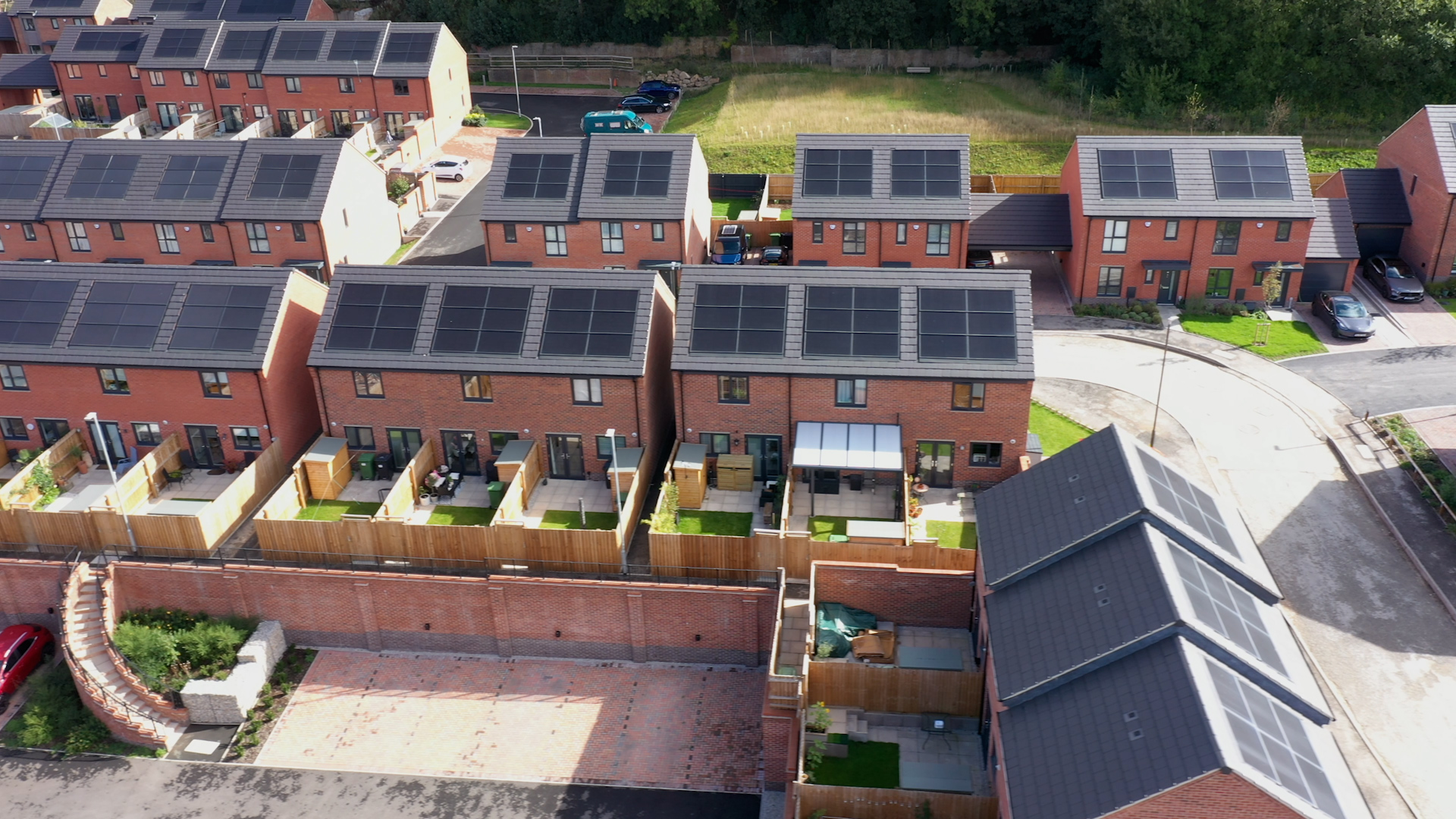
Solfit has launched a new solar system and delivery framework designed specifically for UK housebuilders, providing a structured approach to specifying, integrating and delivering solar PV across residential developments as the industry prepares for the introduction of the Future Homes Standard in 2028.
With the Standard set to require new homes to generate electricity on site and meet significantly higher performance expectations, solar PV is rapidly becoming a core component of residential design rather than an optional addition. This shift is increasing the need for consistent, compliant and scalable approaches to system design and delivery.
Solfit’s housebuilder offering has been developed in response to these challenges, positioning solar not as a standalone product or installation activity, but as a fully specified system integrated within the wider building fabric and supported through a coordinated delivery
model. The approach brings together system design, product configuration and delivery oversight into a single structure intended to support consistency across multi-plot developments.
The solution incorporates specification-led design aligned with Part L and the direction of the Future Homes Standard, alongside an integrated electrical architecture designed to reduce DC risk at roof level. Product configuration is structured to support compliance expectations, including alignment with warranty provider requirements, while the overall model is intended to improve coordination across design, procurement and on-site delivery.
As housebuilders move towards adopting solar at scale, many are encountering challenges around fragmentation between design intent and on-site outcomes, as well as increasing scrutiny around fire safety, electrical risk and overall system performance. Inconsistencies across sites and supply chains can introduce risk, cost and delays if not addressed through a more coordinated approach.
Solfit’s model is intended to provide that coordination, enabling housebuilders to move away from project-by-project decision making towards a repeatable and standardised solar strategy that can be applied across portfolios. By aligning specification, system design and compliance from the outset, the framework supports more predictable delivery, improved quality and reduced long-term risk.
The system is underpinned by a compliance-led design philosophy, including AC-based architecture to reduce high-voltage DC at roof level, B Roof (t4) fire certification to support roof system compliance, and MCS-aligned design principles to enable certification pathways. The system is designed as part of the building fabric, fully integrated within the roof system rather than relying on add-on mounting approaches, supporting a more cohesive and controlled approach to integration.
The launch also coincides with the appointment of Lee Chadwick as Managing Director, supporting engagement with housebuilders and wider industry stakeholders.
Lee Chadwick commented:
“The Future Homes Standard is driving a fundamental shift in how energy is designed into new homes. The challenge is no longer whether solar is required, but how it is specified, integrated and delivered consistently at scale. Solfit has been developed to address that challenge directly, aligning specification, system design and delivery into a single framework that housebuilders can adopt with confidence.”
With implementation of the Future Homes Standard approaching, and increasing focus on fire and system-level risk through emerging HSE guidance, the role of solar within residential development is evolving from a compliance consideration to a core building system requiring structured delivery. Solfit’s launch reflects this transition, providing a system-led approach to support housebuilders in meeting both current requirements and future regulatory expectations.