

NASA’s first manned flight around the moon for 50 years has sparked fresh interest in space exploration while also reminding us of the tantalising properties to a vacuum: especially back here on earth. As the poster for the original Alien movie said: “In space no one can hear you scream.”
There are many industrial applications for vacuum technology, and these continue to expand as technology advances. At the same time, falling costs are making it an increasingly practical solution for high-performance glazing. Aside from being a very good barrier against sound transmission, the thermal insulation value of an evacuated 8mm thick IG unit can actually exceed that of triple glazing, as London based ASWS has demonstrated using custom made units supplied by 1st Vacuum Glass.
While controlling cost is crucial on almost any contract, with listed building and other heritage projects, aesthetic perceptions along with the basic principles of conservation will generally take precedence. Increasingly, keeping faith with the original fabric of a property is also in harmony with the goals of sustainability – counting towards higher BREEAM ratings.
The purchase price of vacuum glazing units is continuing to reduce as adoption increases, narrowing the gap with standard slimline double glazing and secondary glazing systems, both of which are typically more visually intrusive. Additionally, as vacuum units can often be fitted within the existing rebate depth there will be a significant saving on labour and impacts on heritage; while in some circumstances they could provide the only solution to avoid full replacement of the original frames.
William Green, Sales and Operations Manager for 1St Vacuum Glass, observes: “We are seeing a strong increase in demand for LandVac vacuum glass, driven by its superior thermal and acoustic performance. This growth is also being supported by improving cost competitiveness, positioning it as a financially viable alternative to more commonly used solutions such as slimline double glazing.
In addition, while some traditional units can be prone to performance degradation over time, LandVac offers a 25-year warranty, providing long-term confidence and durability.
“In fact, LandVac units can be as little as 6.3mm thick while the U-value can be cut to just 0.4 W/m2 K. This allows them to be installed into existing frames with minimal alteration to the building’s historic fabric, a key requirement in conservation areas. Increasingly, organisations such as Historic England recognise vacuum glazing as a viable solution for improving energy performance while retaining original windows.
“In short: vacuum glazing is no longer a niche product: it’s becoming a practical, scalable solution for balancing heritage preservation with modern energy performance.”
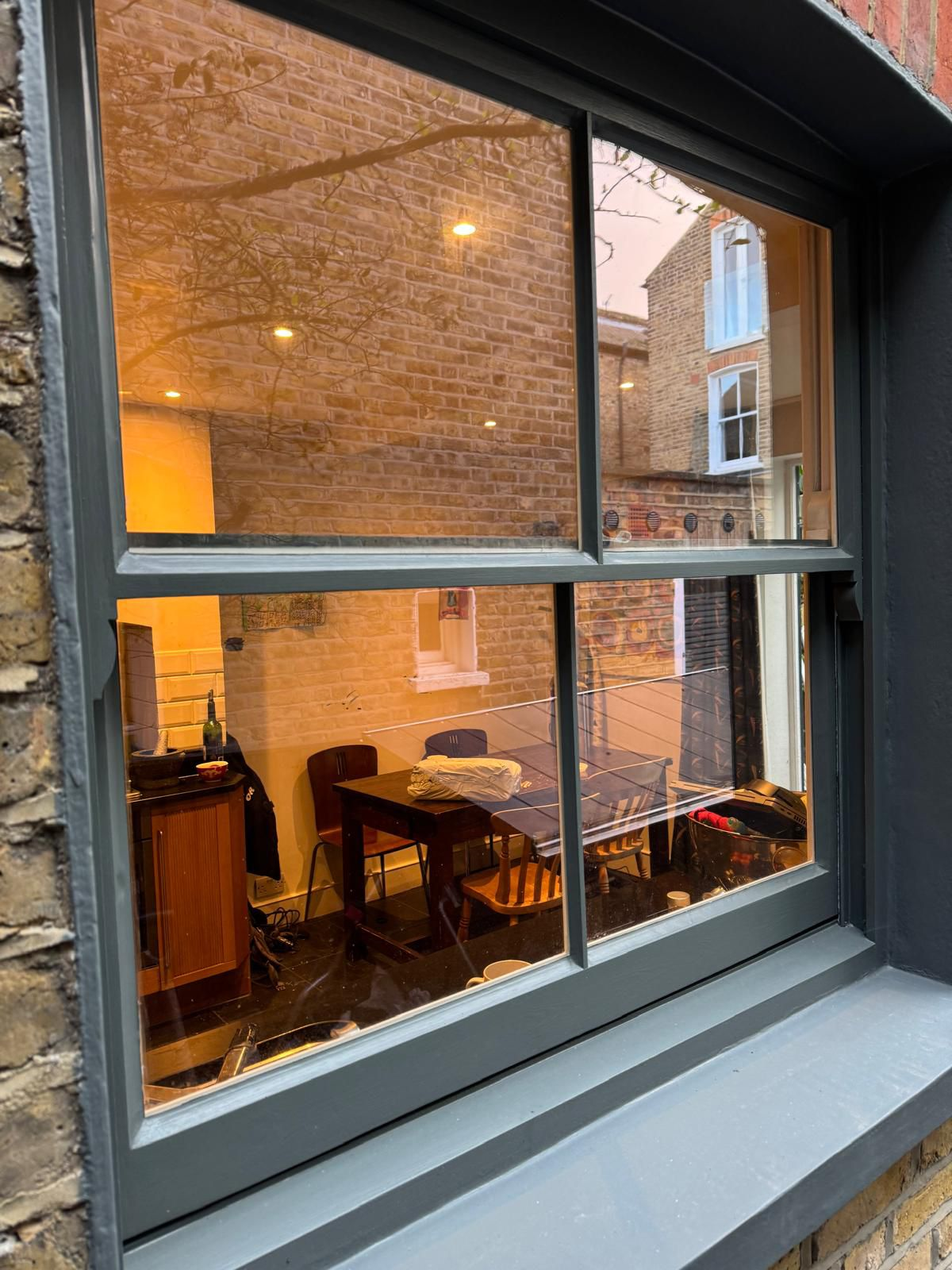
Interestingly ASWS is often tasked with sourcing ‘heritage’ glass – with its irregular reflectance – for restoration contracts, but another aspect to vacuum units worthy of consideration is how the significantly reduced gap between the inner and outer leaf is close enough to effectively obviate the issue of a ‘Double Reflection’. Often apparent when looking at double glazed windows from outside, it is an effect which conservation officers and heritage bodies always want to avoid.
Reflecting on the wide ranging benefits of incorporating vacuum glazing within conserved steel, timber and other window types, the Operations Director for ASWS, Kris Bennell, adds: “The majority of our contracts concern listed buildings and those in conservation areas where keeping faith with the original fenestration patterns is a key requirement, but the need to balance heritage with energy conservation has been underlined by an important new planning policy published by Westminster City Council in January.
“At the core of the ‘City Plan Partial Review’ is a new Retrofit First policy to tackle Climate Change, requiring developers to consider all reasonable options for adapting existing buildings rather than demolishing and rebuilding. And the urgency is underlined by the fact that 90% of Westminster’s total CO2 emissions are linked to the built environment, compared to the 40% figure typical for most councils. As we know, fenestration is responsible for a big proportion of the heat loss from domestic and other properties so we would expect to be fitting a lot more vacuum glazing units in the course of our future heritage and other refurbishment projects.”