
Housing Secretary Angela Rayner has granted approval for the controversial £500m redevelopment of the Truman Brewery estate in east London, allowing the major mixed-use scheme to proceed despite strong opposition from Tower Hamlets Council and local campaign groups.
The plans, brought forward by Truman Estates and Zeloof LLP, will transform three separate sites around Brick Lane through a series of linked planning applications. The proposals aim to create a new commercial and cultural destination while retaining key elements of the historic brewery complex.
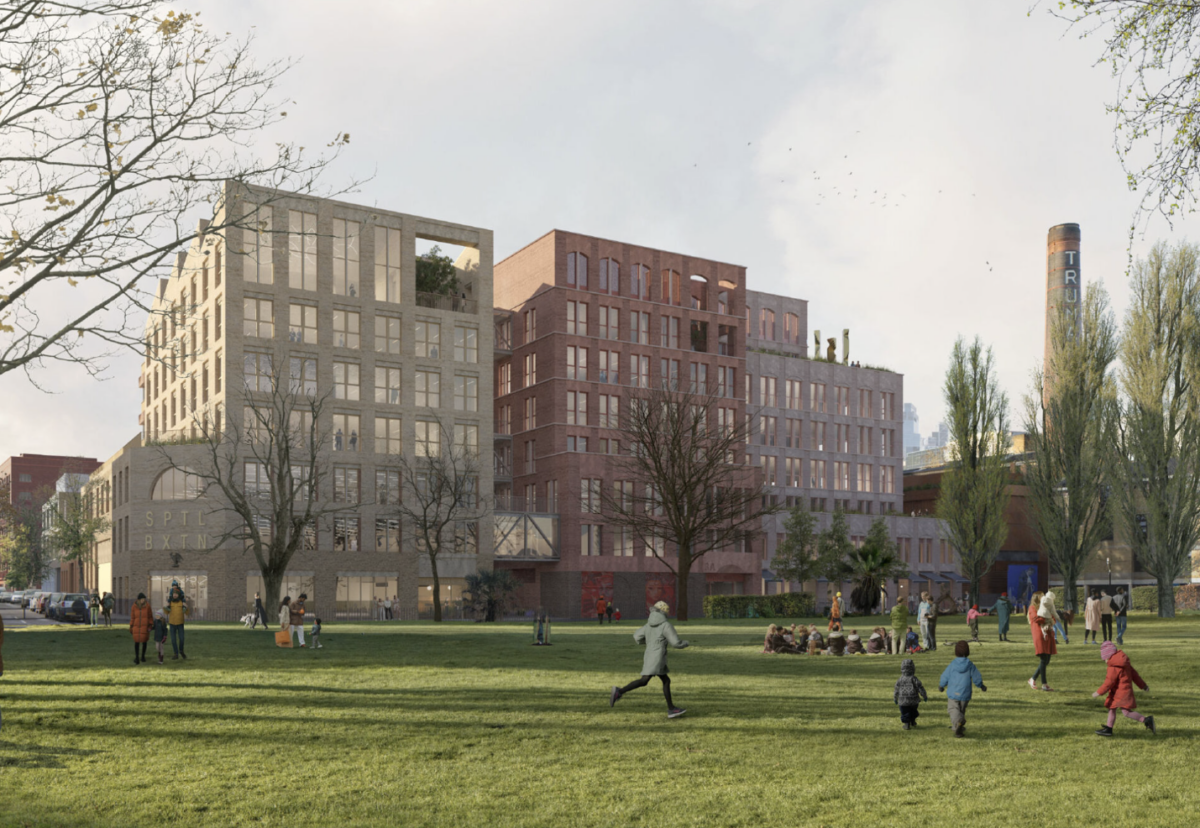
The redevelopment will introduce five new buildings providing a mix of offices, retail space, restaurants, a cinema, market areas and a data centre at Grey Eagle Street. Alongside the new construction, important historic elements of the former brewery will be retained, including the boiler house and cooperage, which will be refurbished to provide event space and a microbrewery.
The scheme also includes the delivery of 44 new homes, although only 11 will be designated as affordable housing. This includes six homes for social rent, a figure that became one of the main points of debate during the planning process.
Ministers concluded that the wider regeneration and economic benefits of the development outweighed concerns regarding the limited housing contribution and potential impacts on Brick Lane’s established cultural character. The decision follows a lengthy public debate over how the area should evolve while protecting its historic identity and the communities that have shaped it.
In the decision letter issued on behalf of Rayner, housing minister Matthew Pennycook said the Secretary of State had taken into account “the housing needs of the local community, and the strongly held local views on the proposals”, including concerns raised by members of the area’s Bangladeshi community.
He added that there was “no detailed evidence” that a more housing-led alternative scheme could be delivered, while noting that the six social rented homes included within the approved proposals had been designed to respond to identified local needs, including accommodation suitable for larger Bangladeshi heritage families.
The Truman Brewery estate occupies a prominent position within the Brick Lane area, which has undergone significant change in recent decades while remaining recognised for its independent businesses, cultural venues, food markets and heritage. The redevelopment has attracted debate over the balance between economic investment and maintaining the area’s distinctive identity.
Supporters of the scheme have argued that it will bring significant investment, create new employment opportunities and provide modern commercial and cultural facilities while preserving important historic structures. The proposals are intended to improve connections across the estate and create additional public spaces for visitors, workers and local residents.
Opponents have raised concerns about the scale and nature of the development, particularly the impact on Brick Lane’s cultural heritage and the limited number of affordable homes included within the plans. Tower Hamlets Council had objected to the proposals, arguing that the scheme did not provide sufficient community benefits.
The approval means the project can now move forward into the delivery phase, with construction expected to take place across the three development areas. The phased nature of the proposals will require careful coordination between new-build construction, refurbishment of historic structures and the continued operation of surrounding businesses and venues.
The redevelopment represents one of the most significant regeneration projects in east London’s commercial and cultural districts. Its progress will be closely watched as work begins to reshape a site that has played an important role in the history and identity of Brick Lane for generations.