

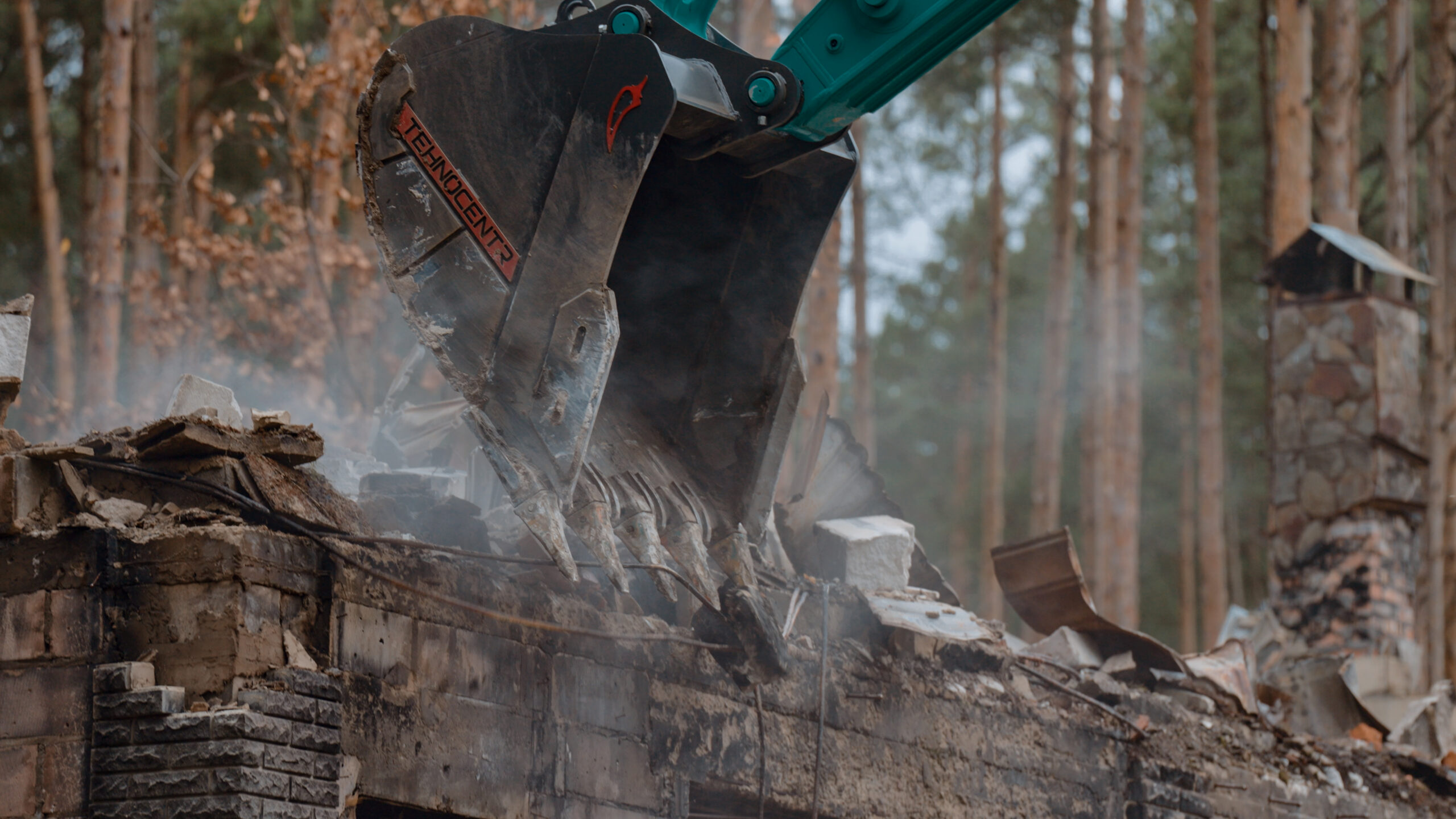
Kobelco Construction Machinery has completed a two-day trial of its K-DIVE teleoperation system at a debris clearance site near Kyiv, testing the technology’s potential for reconstruction work in hazardous environments across Ukraine.
The verification exercise, conducted on 11 and 12 November 2026, was carried out by Kobelco Construction Machinery (KCM) and its European subsidiary, Kobelco Construction Machinery Europe (KCME), under a memorandum of understanding with the United Nations Development Programme (UNDP).
The trial involved a local operator controlling a hydraulic excavator remotely from a dedicated cockpit installed at a partner company’s office. The operator completed a planned sequence of debris clearance tasks without having to enter the potentially hazardous working area.
Launched in 2022, K-DIVE connects operators in remote cockpits to excavators working on site. The system is designed to allow machinery to be controlled from a safer location, reducing the need for personnel to work in environments where they may be exposed to significant risks.
In Ukraine, the technology is being assessed as a potential means of supporting reconstruction activities where damaged buildings and infrastructure can present dangers to workers. These include sites containing asbestos-contaminated rubble, as well as areas where unexploded ordnance and unstable structures may complicate clearance operations.
The trial also provided an opportunity to examine the practical requirements for operating the system locally. KCM and KCME tested operating procedures and operator training protocols, while a demonstration for local stakeholders gathered feedback on its possible use in wider recovery and infrastructure projects.
Remote operation could also help address labour shortages affecting reconstruction work, allowing skilled operators to control machinery without being physically present at the worksite. The system’s suitability for wider deployment will depend on further testing, local support arrangements and the ability to integrate the technology into different site conditions.
The Kyiv exercise forms part of a wider programme of Japanese-Ukrainian cooperation on infrastructure recovery. The Japanese government’s Ministry of Land, Infrastructure, Transport and Tourism established the Japan-Ukraine Platform on the Infrastructure Technology for Recovery and Reconstruction in early 2025.
Before signing its agreement with the UNDP in June 2026, KCM had participated in preliminary surveys in Ukraine and carried out a long-distance demonstration in October 2025. That exercise connected a K-DIVE cockpit at Taras Shevchenko National University of Kyiv with machinery in Kobe, Japan, approximately 8,000km away.
KCM intends to continue on-site testing with local partners, with the aim of establishing the operational and support arrangements needed for potential deployment of K-DIVE on future Ukrainian recovery and infrastructure projects.