
The next time you buy a coffee, check into a hotel, visit a healthcare facility, stop at a motorway service area or walk into a modern workplace or school, take a moment to look around. Richard Hipkiss, development director, Modular and Portable Building Association (MPBA) considers the buildings you use every day — but never knew were modular.
Part of everyday life
There is a very real possibility that you are standing inside a modular building – but you probably would not know it and that is exactly the point. For decades, modular construction has been fighting against outdated perceptions. The term ‘modular’ has been associated with temporary structures, classrooms or buildings that are visibly different from traditionally constructed properties. But that image belongs firmly in the past.
Today, our modular manufacturing members are producing high-quality, permanent buildings that are designed, produced and finished to the highest standards. The reality is that modular buildings are already part of everyday life. They are occupied by thousands of people, yet most customers, visitors and end users have no idea that they were created in a factory environment.
Across the UK, volumetric modular solutions have been adopted across a wide range of sectors, including retail, hospitality, healthcare, education and commercial developments. Some of the country’s best-known brands have embraced modular technology because it enables them to deliver consistent, high-quality facilities – quickly and efficiently.
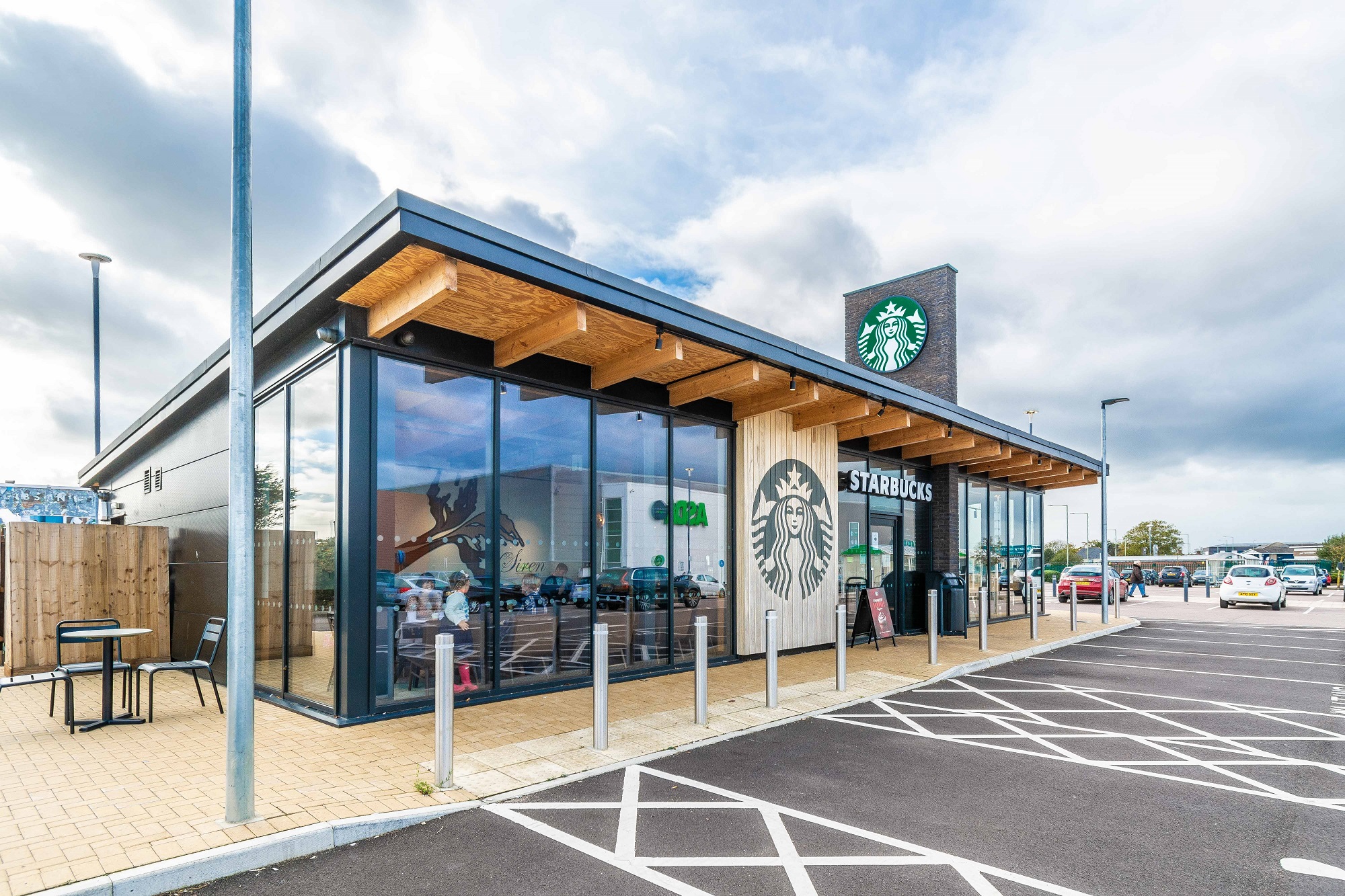
Retail businesses, for example McDonalds and Starbucks – need environments that reflect their brand identity while also meeting tight programme schedules. Whether it is a coffee shop, a restaurant unit, a hotel bedroom or a customer-facing facility, volumetric construction provides the ability to manufacture repeatable, precision-engineered buildings that can be installed rapidly with minimal disruption.
The customer sees the finished result. They experience the service, the quality and the surroundings. They rarely consider the factory where much of the building was created. This is one of the biggest strengths of modern modular construction.
Proven solution
Unlike traditional construction, where many activities are carried out sequentially on a live site, modular manufacturing allows multiple processes to happen at the same time. While foundations are being prepared on site, building modules can be manufactured, fitted out and quality checked in a controlled factory environment. The result is greater certainty around programme delivery, improved quality control and reduced disruption.
For sectors such as healthcare and education, where time and reliability are critical, these advantages are particularly valuable. Hospitals need additional capacity delivered quickly. Schools need new facilities that can be provided around operational requirements. Businesses need buildings that allow them to grow without lengthy construction programmes. Modular technology provides a proven solution to these challenges.
Quality controlled
The growing adoption of modular technology also reflects a wider shift towards more sustainable ways of building. Factory-based manufacturing allows materials to be managed more efficiently, waste to be reduced and quality to be controlled throughout the process.
The modular sector does not necessarily need to prove that its buildings work. The evidence is already all around us. The challenge is helping people recognise that the buildings they interact with every day may have been delivered through advanced offsite manufacturing and industrialised construction methods.
The public perception of modular construction is changing, but perhaps the greatest endorsement of the industry’s progress is that many people do not notice modular buildings at all. They simply see well-designed, functional, attractive spaces that allow businesses to operate, patients to receive care, students to learn and communities to thrive. The technology behind those buildings may be innovative, but the experience they provide is familiar. Modular buildings are already shaping the places where we live, work and spend our time but have simply been hiding in plain sight.