

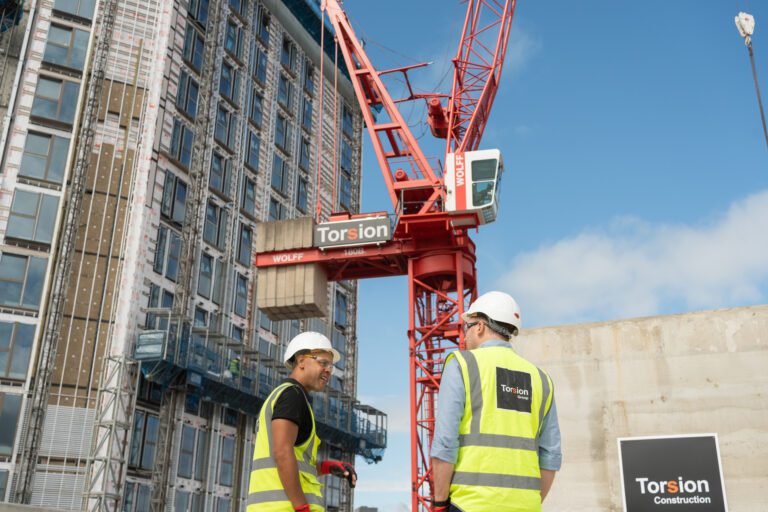
Torsion Construction has reported a 41% rise in turnover to £165m for the year to 30 June 2025, driven by strong activity in the student accommodation and build-to-rent sectors, although profitability remains constrained.
The Leeds-based contractor saw pre-tax profit increase to £814,000 from £404,000 the previous year, but margins stayed tight at just 0.7%, highlighting continued cost pressures across the construction market despite rising workloads.
Torsion said its delivery model, which involves close collaboration with sister company Torsion Developments from project conception through planning and pre-construction, has helped reduce risk across its schemes and improve overall project outcomes.
The contractor also pointed to its regional focus across the North of England and the Midlands as a key driver of growth, enabling it to strengthen its presence in major city markets while achieving a more balanced geographic spread.
Work secured from external clients now accounts for 61% of total turnover, up from 58% the previous year, reflecting a continued shift towards a broader client base beyond the group’s internal development pipeline.
The business said that recent investment in staff, organisational structures and senior leadership is beginning to translate into improved financial performance, with a higher number of profitable projects delivered during the year.
At the end of June, Torsion reported a secured pipeline of around £660m, largely concentrated in residential and alternative living sectors. The pipeline now includes a wider mix of project types, locations and values, providing a more diversified workload.
Management said the company remains on track to achieve turnover of more than £200m within the next two years as part of its medium-term growth strategy.
However, Torsion cautioned that the outlook for 2025/26 points to flat growth or a potential slowdown in demand, which could place pressure on monthly revenues and require additional financial support from the wider Torsion Group.
The contractor added that the impact of the Building Safety Act, alongside broader market conditions, is affecting projected workloads and prompting the business to explore a more diverse range of project opportunities.
Cash reserves at the year end stood at £3.5m, down from £5.5m the previous year, despite the increase in profitability.