

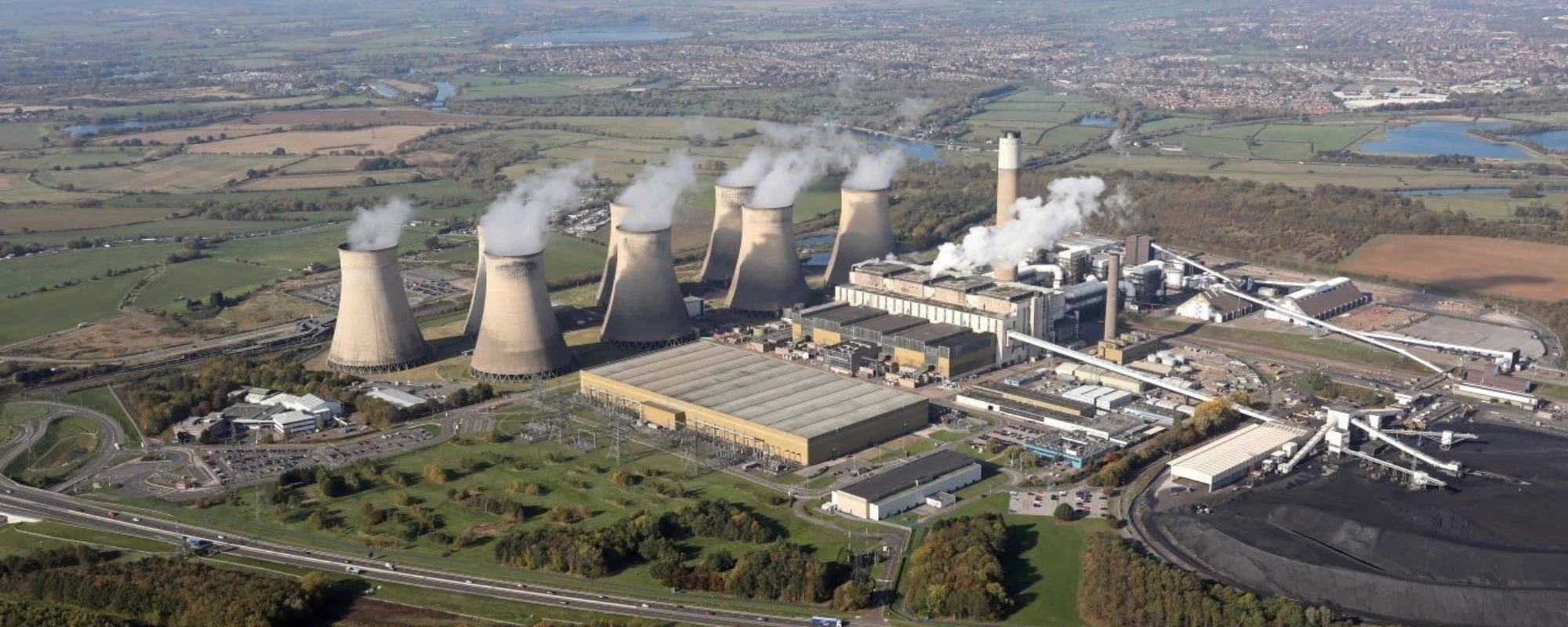
Erith has been appointed to carry out the demolition of the former Ratcliffe-on-Soar Power Station, launching a major four-year programme that will ultimately see the removal of the site’s landmark cooling towers and prepare the vast brownfield location for future redevelopment.
The contractor is due to mobilise on site this summer, with demolition works scheduled to commence later in the year. The project represents one of the largest industrial demolition and site clearance schemes currently planned in the UK.
Over the course of the programme, Erith will dismantle and remove the remaining structures associated with the former coal-fired power station, clear waste materials and return the 700-acre site in a condition suitable for redevelopment.
Due to the scale and complexity of the operation, demolition activities will be undertaken in carefully managed phases. The main power station buildings and turbine hall are not expected to be demolished before the middle of 2028, while the site’s iconic cooling towers are currently scheduled to remain in place until at least 2029. Demolition of the chimney stack will take place at a later stage in the programme.
The sequencing of works reflects both the size of the site and the logistical challenges involved in carrying out demolition activities adjacent to major transport infrastructure, including National Rail, National Highways and East Midlands Airport.
Andy Dyson, Operations Director, Erith said: “Ratcliffe-on-Soar Power Station is a significant site, both in terms of its scale and its role in the UK’s energy history. The transition following the end of coal-fired generation marks an important stage in how legacy infrastructure is managed and sites are repurposed.”
The demolition programme marks the next chapter in the transformation of a site that played a significant role in Britain’s electricity generation network for decades. Ratcliffe-on-Soar was the last operational coal-fired power station in England before ceasing generation, making its closure a notable milestone in the UK’s energy transition.
Once demolition is complete, the site is expected to become one of the most significant redevelopment opportunities in the Midlands. Its strategic location and extensive land availability have already attracted interest for a range of future uses linked to low-carbon industry and advanced manufacturing.
The former power station benefits from a Local Development Order that supports the delivery of low-carbon energy projects, battery manufacturing facilities, energy storage developments and data centres. These planning advantages are intended to accelerate investment and support the creation of a major employment and innovation hub.
Part of the site also falls within the East Midlands Freeport, providing additional incentives for businesses seeking to establish operations in the area and reinforcing the location’s appeal for large-scale industrial and technology investment.
Ratcliffe-on-Soar occupies a prominent position within the Trent Arc growth corridor, which stretches between Derby and Nottingham. Regional leaders view the corridor as a key driver of economic growth, with ambitions to attract substantial private-sector investment across advanced manufacturing, clean energy and technology sectors.
Economic forecasts associated with the wider Trent Arc initiative suggest future development across the corridor could support more than 40,000 jobs and contribute around £2.4bn annually to the regional economy.
The appointment of Erith marks the beginning of a significant transformation project that will see one of the UK’s most recognisable power generation sites cleared and prepared for a new role within the country’s evolving industrial and energy landscape.