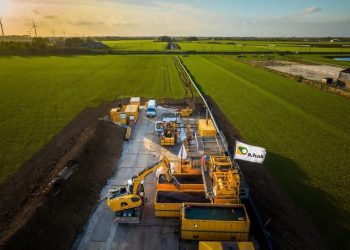

Hinkley Point C has completed excavation of the 620m tunnel that will form part of the power station’s fish return system beneath the Bristol Channel.
The tunnel boring machine (TBM) broke through the seabed five months after beginning its journey from dry land, marking the completion of another major engineering milestone at the Somerset nuclear power station.
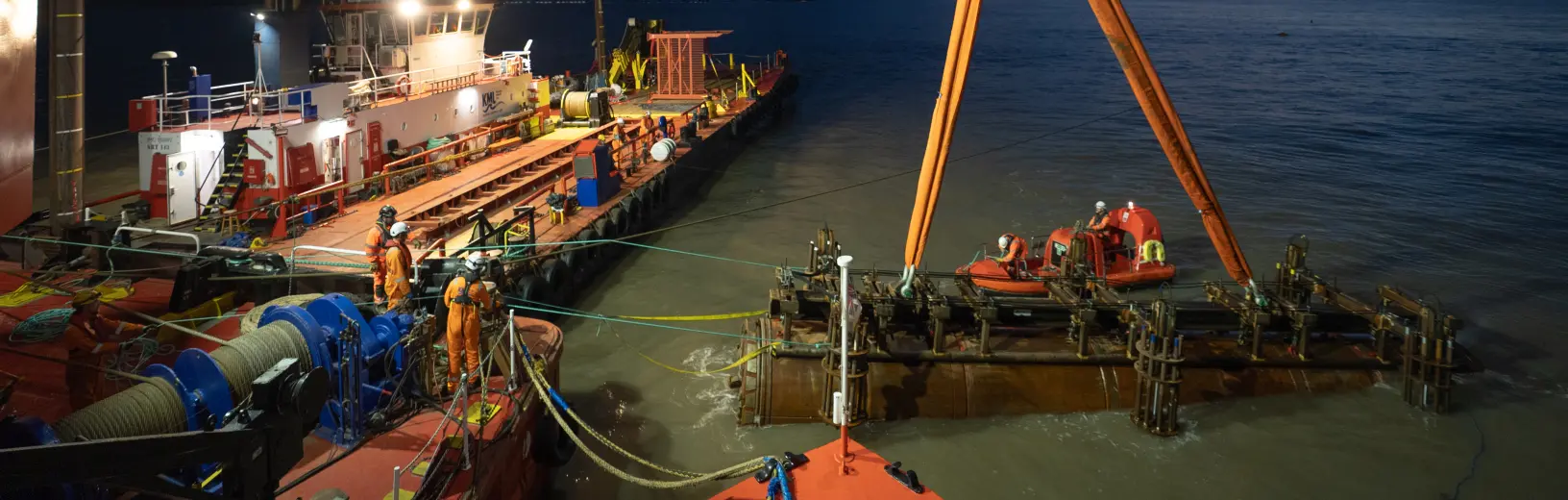
Following the breakthrough, the TBM was recovered from the seabed by a floating crane and will be removed from the site for cleaning before being redeployed on another project.
The fish return tunnel is one of three systems being installed at Hinkley Point C to protect marine life around the power station’s cooling water infrastructure. Together, the measures are intended to provide a comprehensive system for reducing the impact on fish.
The other two measures are an acoustic fish deterrent and four low-speed water intakes. The intakes have been designed to allow fish to swim away from them from as close as 2m, despite being located within the 20km-wide Bristol Channel.
The completed tunnel will form part of the system for returning fish and other marine life safely to the channel after they have passed through the power station’s cooling water system.
The TBM was named “Sarah Guppy” by local schoolchildren in recognition of the pioneering 19th-century Bristol engineer.