
Tom Roche, Secretary of the Business Sprinkler Alliance, looks at a series of devastating fires at tourist destinations and asks whether fire safety regulations are being properly enforced – and why questions about compliance are so often only asked after tragedy strikes.
Two very different fires this year have left the same question hanging in the air. When something goes wrong in the buildings where we holiday, why does it always take a tragedy before anyone asks whether the regulations were followed?
A fire that won’t go out
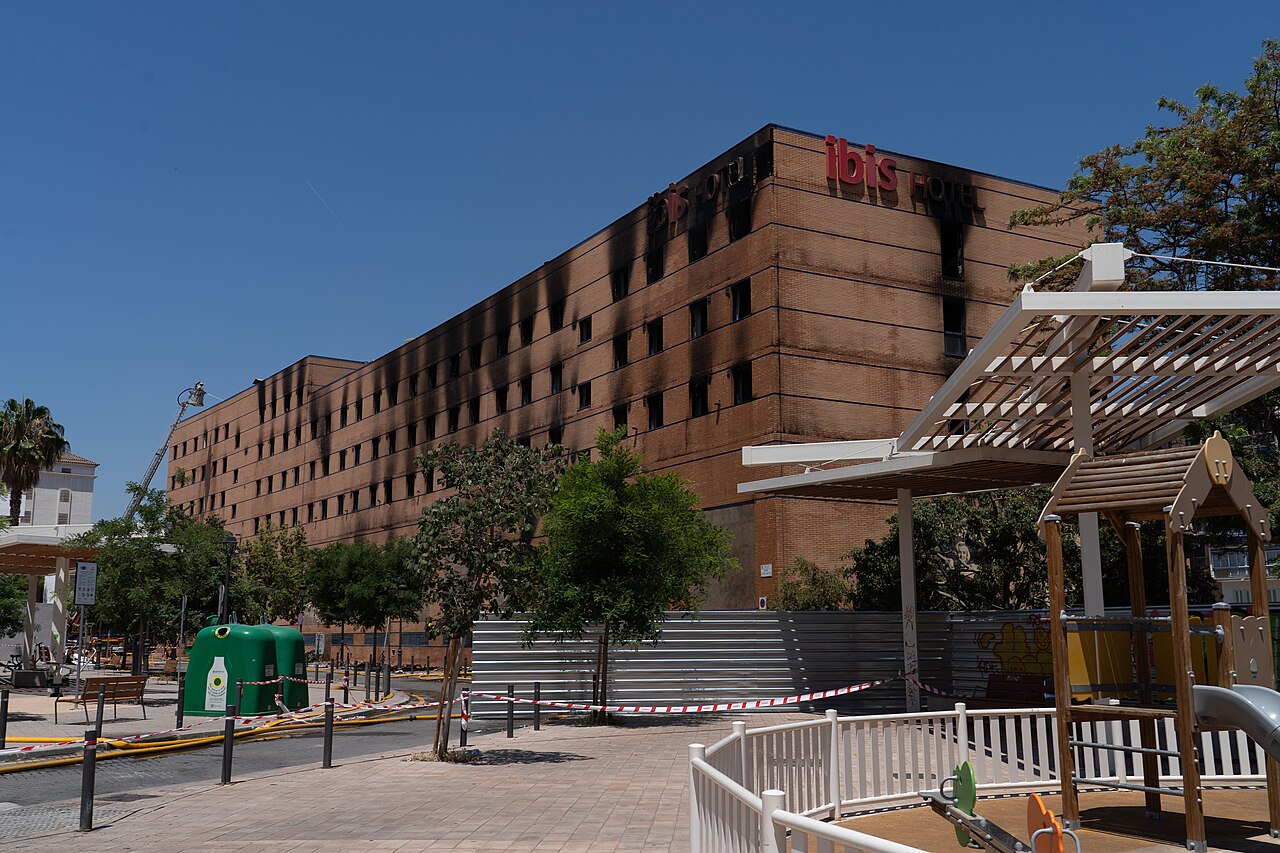
In May, the Ibis hotel in central Malaga was gutted by a fire that started in a ground floor restaurant and ripped through all four storeys of the building. It burned for four days having reignited three times. This was partly due to wooden flooring and combustible interior materials that kept feeding hidden hotspots long after firefighters believed the blaze was out. More than 100 guests were evacuated in the middle of the night. The fire and rescue service used more than two million litres of water in 12 hours, enough water to supply a town of 20,000 inhabitants for half a day. Investigators are examining why the fire compartmentation between floors failed so completely, and fire safety consultants reviewing the incident have said a working suppression system could have held the blaze to a single area.
What stood out was not the reaction of the tourists who had been sleeping there hours earlier. It was local residents and business owners, alarmed by the reignitions and the smoke returning to their skyline, who began asking publicly whether the building had been properly inspected and whether the city was prepared for a fire like this at all. The president of the old town’s residents’ association has warned the council that the historic centre carries a particularly high fire risk, citing timber-framed buildings, a dense cluster of nightlife venues and streets too narrow for fire engines.
A bar, not a hotel
The Constellation bar in the ski resort of Crans Montana is not a hotel. But the New Year fire that killed 41 people and injured over 100 in the basement bar of this Swiss ski resort belongs in the same conversation, because the venue was full of exactly the kind of visitor who fills hotels across Europe every season. The bar had not been inspected since 2019, despite annual checks being a legal requirement. Of 128 bars and restaurants in the resort, only 40 were inspected the previous year. It has since emerged that a fire exit was locked and that staff had known for years the ceiling foam was a hazard.
A further fire on the 12th July in a Bangkok bar is reported to have killed 36 people and left a further 70 injured. The local outcry has led to the Bangkok Metropolitan Administration to order inspections to be carried out at similar establishments. They have inspected 865 so far and have shutdown 79 venues.1
Locals, not the young skiers and tourists filling the bars that night, are the ones demanding to know why inspections lapsed and who was supposed to be checking.
A pattern worth noticing
In both cases the legislation existed. What is far less clear is whether it was ever enforced, and who was watching to make sure it was. Whether it is a hotel or a bar, guests simply assume someone already asked these questions on their behalf. They rarely have.
We wrote earlier this year about a South Korean scheme making sprinkler status visible to guests before they book, precisely because nobody else was going to ask for them. Malaga and Crans Montana are further evidence that the people who should be raising these questions, the travellers actually staying or visiting these buildings, are the last to do so. It is only ever afterwards, when residents and shopkeepers are left staring at a gutted building on their own street, that anyone asks whether fire safety features are up to date or sprinklers were fitted and who was supposed to be checking.
If fire safety and the use of sprinklers is only ever interrogated in hindsight, it isn’t really being checked at all.