

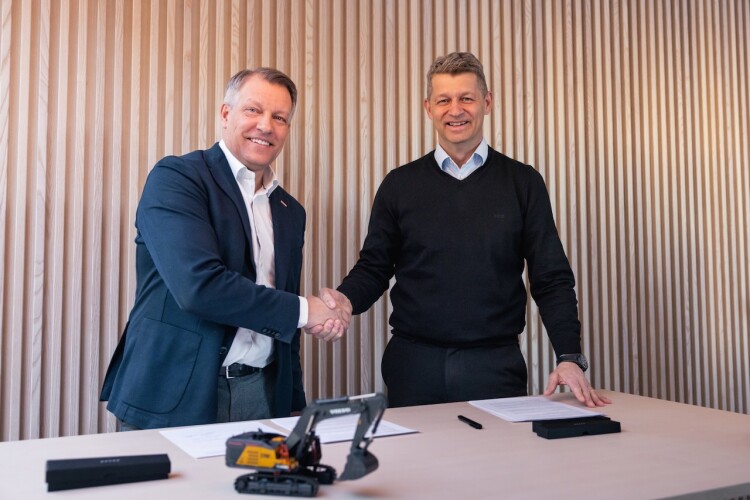
Volvo Construction Equipment and Hitachi Energy have announced a collaboration aimed at accelerating the transition from standalone electric construction machinery to fully integrated zero-emission construction sites.
The partnership will focus on developing end-to-end approaches that support the deployment of emissions-free construction operations by combining electric machinery with power supply systems, energy management technologies and wider site integration capabilities.
Volvo Construction Equipment has already developed a growing range of electric construction equipment, including excavators, wheel loaders and material handling machines. However, both companies said the move towards fully operational zero-emission construction sites requires coordinated integration between equipment, charging infrastructure and energy management systems.
Under the agreement, Volvo Construction Equipment and Hitachi Energy will work together on a non-exclusive basis to evaluate technical and commercial concepts supporting both zero-emission construction and manufacturing operations.
The collaboration will place particular emphasis on system integration and site-level operational execution.
Melker Jernberg, president of Volvo Construction Equipment, said: “Strategic partnerships such as this with Hitachi Energy are key to accelerating the transition to zero-emission construction. By combining complementary expertise and delivering a complete, integrated solution, we are giving customers the confidence, security, and peace of mind they need to adopt emission-free operations today.”
Niklas Persson, CEO of Grid Integration at Hitachi Energy, said: “Electrification is a game changer in the decarbonisation puzzle, particularly for hard-to-abate environments such as construction sites.
“As construction operations become more electric and more complex, success depends less on individual technologies and more on system-level integration, strong execution, and close collaboration with partners like Volvo CE who share our ambition to enable zero-emission construction at scale.”