

The collapse of US-Iran negotiations has delivered a stark reminder to the UK construction sector: geopolitical risk is no longer a distant concern—it is now a direct cost driver on every live project.
Only weeks ago, a fragile easing in tensions offered contractors a brief window of pricing stability. That window has now closed. With diplomacy faltering and tensions re-escalating, energy markets have lurched back into volatility, pushing oil prices towards—and in some forecasts beyond—the $100 per barrel threshold.
For an industry already operating on thin margins, this is not just another inflationary bump. It is a systemic shock.
Energy volatility: the multiplier effect on construction costs
Construction is uniquely exposed to energy price swings. Fuel is not simply an overhead—it is embedded in every layer of the supply chain. From quarrying aggregates and firing bricks to transporting steel and powering site equipment, energy costs ripple through the entire project lifecycle.
When oil and gas prices spike, three immediate pressures emerge:
- Material inflation: Energy-intensive products such as cement, steel, glass and aluminium see rapid cost increases
- Logistics surcharges: Shipping routes through chokepoints like the Strait of Hormuz become riskier and more expensive
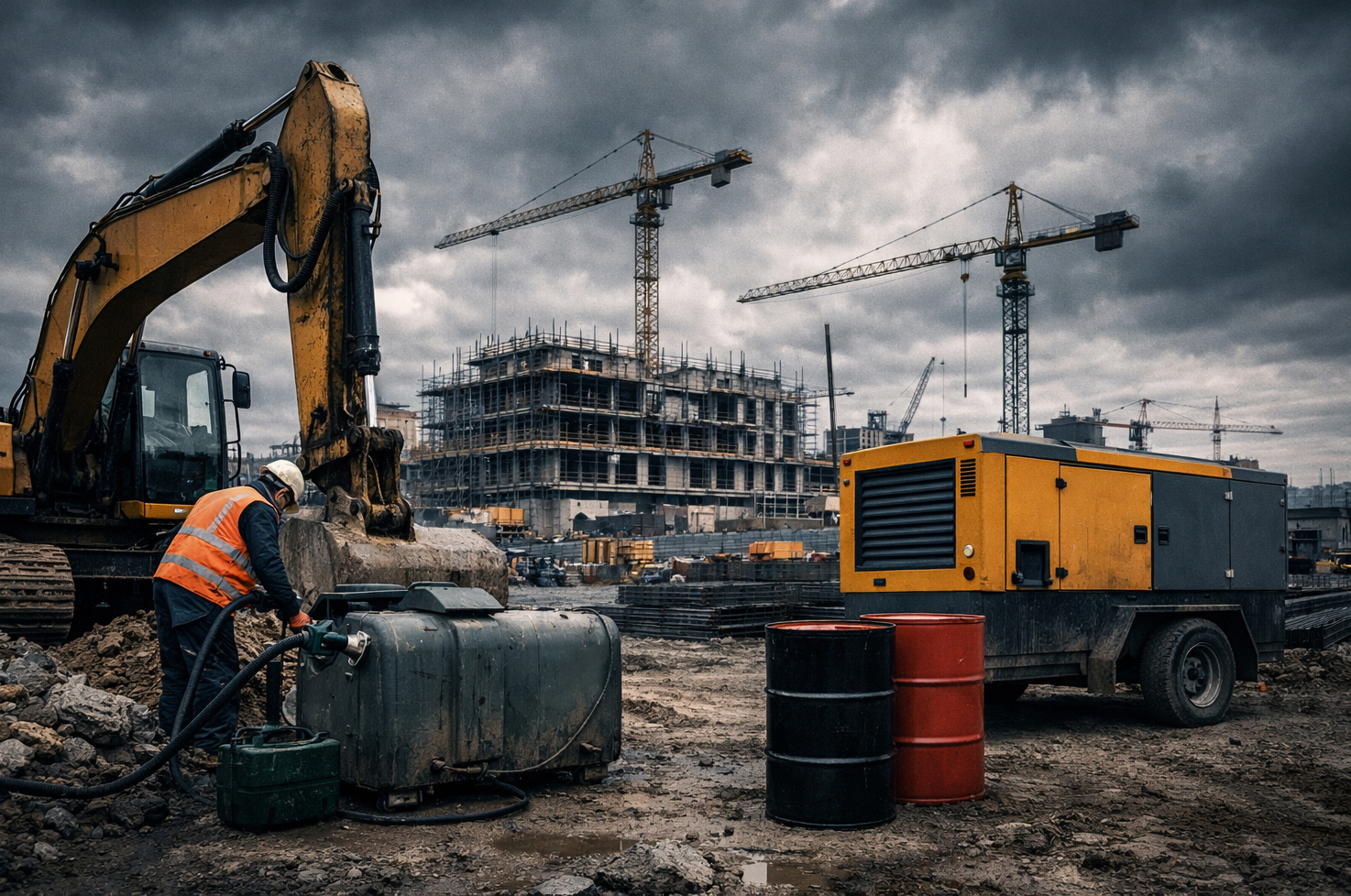
- On-site cost escalation: Diesel-dependent plant and machinery become significantly more expensive to operate
Recent disruption has already demonstrated this effect, with sharp rises in fuel and metals costs feeding directly into construction price indices.
From fragile recovery to renewed uncertainty
The timing could hardly be worse. UK construction had only just begun to show signs of resilience, with output rising modestly earlier in 2026.
Now, that recovery is under threat.
- Housebuilders are scaling back land acquisition amid cost uncertainty and inflation risks
- Developers are warning of further budget pressure linked to energy and materials
- Economists are revising growth forecasts downward as energy shocks ripple through the wider economy
The result is a sector caught between rising input costs and weakening confidence—an uncomfortable position that echoes the post-pandemic inflation cycle, but with a more volatile geopolitical trigger.
Supply chains under renewed strain
Beyond pricing, the breakdown in talks has intensified disruption across global supply chains.
The Strait of Hormuz—through which a significant share of the world’s oil flows—remains a critical vulnerability. Any restriction or perceived risk in this corridor has immediate consequences for shipping costs, insurance premiums and delivery timelines.
At the same time, ongoing regional instability suggests that supply constraints may persist well beyond any short-term diplomatic developments.
For UK construction, this translates into:
- Longer lead times for key materials
- Increased risk premiums in procurement
- Greater likelihood of project delays or re-scoping
The margin squeeze intensifies
Contractors are once again facing a familiar but increasingly unsustainable dilemma: absorb rising costs or pass them on.
In many cases, fixed-price contracts leave little room for manoeuvre. Smaller firms, in particular, risk being pushed to breaking point as successive waves of cost inflation erode already tight margins.
Meanwhile, clients—both public and private—are becoming more cautious. Higher borrowing costs, coupled with inflation uncertainty, are dampening appetite for new project commitments.
The net effect is a slowdown risk that extends beyond cost pressures into pipeline contraction.
A structural warning, not a temporary shock
What makes this moment different is not just the scale of the energy shock, but its frequency.
Brexit disruption, pandemic-era supply chain shocks, regulatory shifts—and now geopolitical energy instability—have created a pattern of recurring external pressures. The collapse of US-Iran talks is simply the latest trigger in an increasingly volatile global landscape.
Crucially, the UK has limited control over these dynamics. Energy prices are set on international markets, leaving the country—and its construction sector—exposed to events far beyond its borders.
The path forward: resilience over optimism
If there is a lesson for the sector, it is this: stability can no longer be assumed.
Contractors, developers and policymakers must now operate on the basis that energy volatility is not an exception, but a baseline condition. That means:
- Embedding greater flexibility in contracts
- Investing in energy efficiency and alternative on-site power sources
- Strengthening supply chain diversification
- Building larger contingencies into project budgets
The failure of US-Iran talks has not created the UK construction sector’s challenges—but it has sharply intensified them.
And unless geopolitical tensions ease in a meaningful and sustained way, this latest cost shock may prove to be not a spike, but the start of a new pricing reality.