

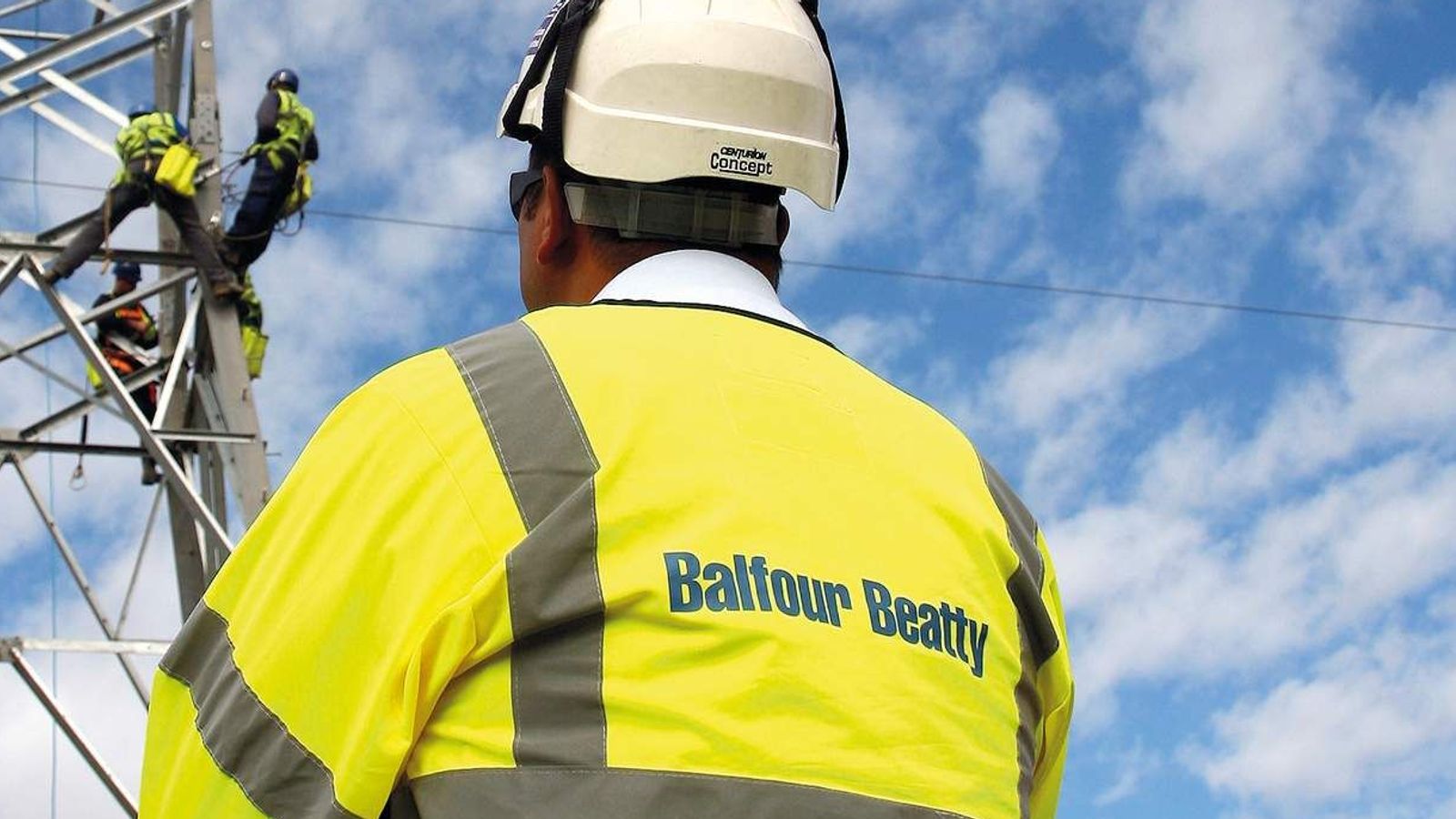
Balfour Beatty will return to the FTSE 100 index of leading shares on the London Stock Exchange on 1 October, ending a 17-year absence from the blue-chip index.
The UK’s largest contractor is being promoted from the FTSE 250 after asset manager Schroders was acquired by Pantheon LLC, a subsidiary of US-based asset management firm Nuveen, in a £9.9bn deal.
Schroders will be delisted on 1 October, meaning Balfour Beatty, which has the largest market capitalisation in the FTSE 250 at £4.45bn, will move into the FTSE 100 as its replacement.
It is “an immediate replacement to be required outside of the usual quarterly reshuffle”, Richard Hunter, head of markets at Interactive Investor, told Construction News.
The FTSE 100 underwent its latest regular quarterly reshuffle earlier this month, taking effect on 21 September. EasyJet and Ithaca Energy joined the index, while Entain and Persimmon dropped out.
Balfour Beatty was last included in the FTSE 100 in 2009. It joined the index in January that year before dropping back into the FTSE 250 during the September reshuffle, just nine months later.
The return comes as Balfour Beatty reports growth across its UK and US operations. In August, the contractor reported a 17 per cent increase in half-year pre-tax profit. Group chief executive Philip Hoare told Construction News at the time that he was “pretty positive about the market overall”.
Hunter said on Tuesday (29 September) that Balfour Beatty “has been riding the wave as it concentrates on the UK energy transition and the building of new data centres in the US”.
“Its recent update revealed strong earnings visibility with an order book of £22.9bn as of late June,” he added.
Recent contract awards have included a £325m power transmission project in Scotland and a £315m road maintenance contract in Warwickshire.
The strength of its order book and new work has also prompted Balfour Beatty to announce plans to recruit an additional 2,000 workers in the UK by the end of 2027.
Balfour Beatty shares were around 1 per cent lower in late-morning trading on Tuesday in London. However, the shares had gained 31 per cent since the beginning of the year and 243 per cent over the previous five years.
The contractor’s return to the FTSE 100 comes as demand grows in several of the markets in which it operates, including UK energy infrastructure and major US data-centre projects. Its latest results also pointed to continued investment in infrastructure and construction activity across both markets.