
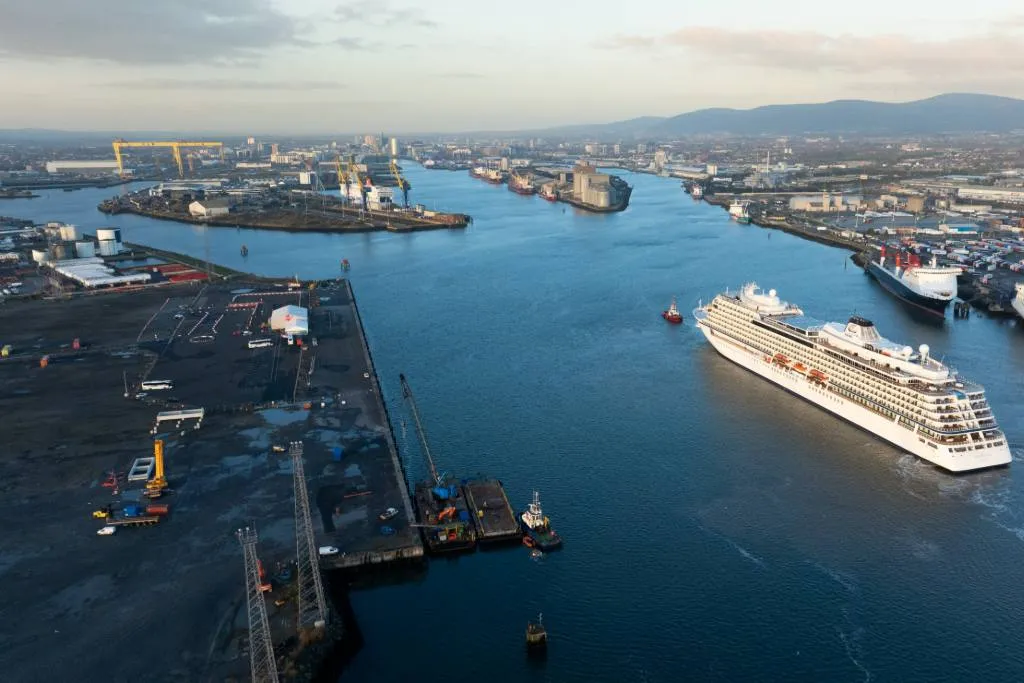
Belfast Harbour has unveiled a £1.3bn masterplan setting out proposals to expand port infrastructure, develop new logistics facilities and support major regeneration projects across its estate over the next 25 years.
Covering the period from 2025 to 2050, the strategy is designed to accommodate rising Irish Sea trade volumes while supporting wider economic growth across Northern Ireland. Belfast Harbour estimates the programme could support almost 5,500 construction jobs and contribute around £12bn annually in gross value added to the economy.
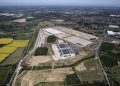
Among the largest infrastructure proposals is the development of a new freight terminal through the port’s first land reclamation scheme in 25 years. The reclaimed site at West Bank Road would provide additional freight-handling capacity as cargo volumes continue to increase. Other planned projects include the redevelopment of Stormont Wharf and the extension of the Victoria Terminal 3 container berth to accommodate larger vessels operating on Irish Sea and international routes.
The wider programme also includes plans for a clean energy hub, additional logistics warehousing close to Belfast City Airport, shore power infrastructure for vessels berthed at the port and the creation of a maritime skills academy intended to support workforce development across the sector.
According to Belfast Harbour’s forecasts, annual trade volumes are expected to rise from approximately 24 million tonnes today to more than 30 million tonnes by 2050 under its base-case scenario. Higher-growth projections suggest volumes could reach between 40 million and 50 million tonnes during the same period.
The organisation said existing infrastructure would be unable to support that level of growth beyond the middle of the century without significant additional investment. Forecasting work for the masterplan was prepared by Haskoning, while the economic impact assessment was carried out by Ulster University and Grant Thornton.
Delivery of the masterplan has been divided into three separate phases. The first phase, Horizon 1, covers the period between 2025 and 2029 and already includes the £90m D3 deepwater cruise and offshore wind terminal, which is currently under construction.
Belfast Harbour said £313m has already been committed during this initial phase, including £208m directed towards port infrastructure and a further £105m invested across the wider estate.
Future phases include reconstruction works at Stormont Wharf, expanded logistics and warehousing developments, and delivery of the new freight terminal associated with the proposed land reclamation scheme.
Alongside its maritime and logistics projects, the organisation also identified significant regeneration and residential development opportunities across its landholdings. Belfast Harbour estimates these schemes could require an additional £500m to £750m of investment delivered through commercial partnerships.
Projects already progressing include City Quays 4, which has planning approval for 325 homes, and Clarendon Wharf, where proposals for up to 600 residential units are moving through the planning process.
Belfast Harbour chair Theresa Donaldson said the investment programme would ensure the port remained “resilient, efficient and competitive”.
Chief executive Joe O’Neill said the strategy aimed to position Belfast Harbour as the “principal maritime gateway” on the Dublin-Belfast Economic Corridor.
The organisation also noted that delivery of some later-stage projects could depend on changes to the accounting classification of Northern Ireland trust ports, which would allow Belfast Harbour greater flexibility to borrow and finance large-scale infrastructure investment.