

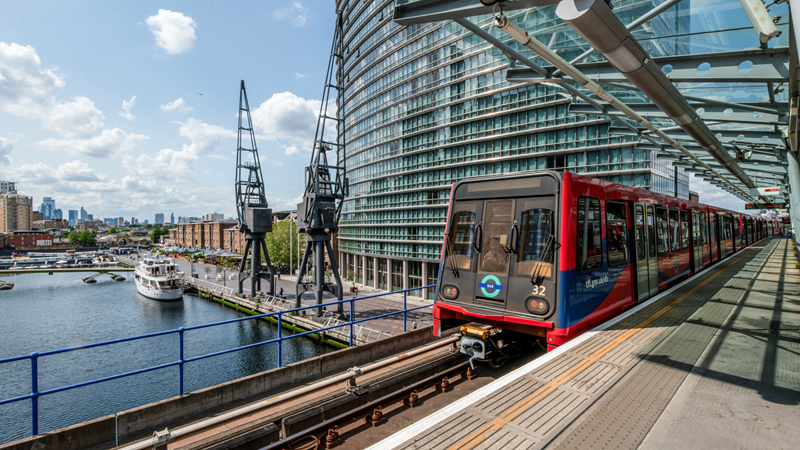
Transport for London (TfL) has launched a consultation on plans to extend the Docklands Light Railway (DLR) beneath the River Thames, setting out proposals for the construction of two 1.5km-long tunnels linking Beckton Riverside with Thamesmead.
The extension would provide a new cross-river transport connection and is expected to require up to five years of construction activity across both locations and beneath the Thames. TfL’s proposals include a substantial programme of civil engineering works comprising tunnel boring, cut-and-cover tunnelling, viaduct construction, station development, utility diversions and the installation of railway systems.
Under the plans, separate bored tunnels would be constructed for each direction of travel, with cross passages connecting the tunnels to provide emergency evacuation routes. Cut-and-cover tunnel sections would also be built where the railway alignment approaches the surface on either side of the river.
At Beckton Riverside, a launch shaft would be constructed to accommodate the tunnel boring machine (TBM) before excavation begins. Once tunnelling is complete, the shaft would be retained as a permanent emergency access and evacuation facility, topped by a head house containing ventilation, electrical and maintenance equipment. TfL said the structure would typically be two storeys in height.
On the southern side of the Thames, Thamesmead would accommodate the tunnel reception shaft. After completing the first tunnel drive, the TBM would be dismantled, turned around and relaunched from this location to construct the second tunnel. The reception shaft would also remain in place as a permanent emergency access point when the railway enters service.
TfL has identified the need for four construction compounds at Beckton Riverside to support works associated with the DLR junction, station, viaducts and tunnelling operations. A further two sites would be established in Thamesmead to facilitate the construction of the elevated station, viaduct structures and tunnel reception shaft.
The project would begin with site clearance, the establishment of construction compounds and utility diversion works. This would be followed by piling operations, station foundation construction, viaduct support installation and shaft excavation. Subsequent phases would include the main tunnelling programme, station construction, track installation and the delivery of power, signalling and telecommunications systems.
The extension would also require integration with the existing DLR network north of Gallions Reach station.
According to TfL, the works would generate significant volumes of excavated material and require the transportation of concrete, steel and precast tunnel segments. The organisation is assessing road, river and rail transport options for moving materials, although its environmental assessment currently assumes that all materials would be transported by road.
A draft Code of Construction Practice has been prepared to govern construction activities, covering matters such as working hours, noise and vibration controls, traffic management, lighting and environmental protection measures.
TfL intends to submit an application for a Transport and Works Act Order in early 2027. Subject to securing the necessary funding and statutory approvals, construction could commence in 2029.